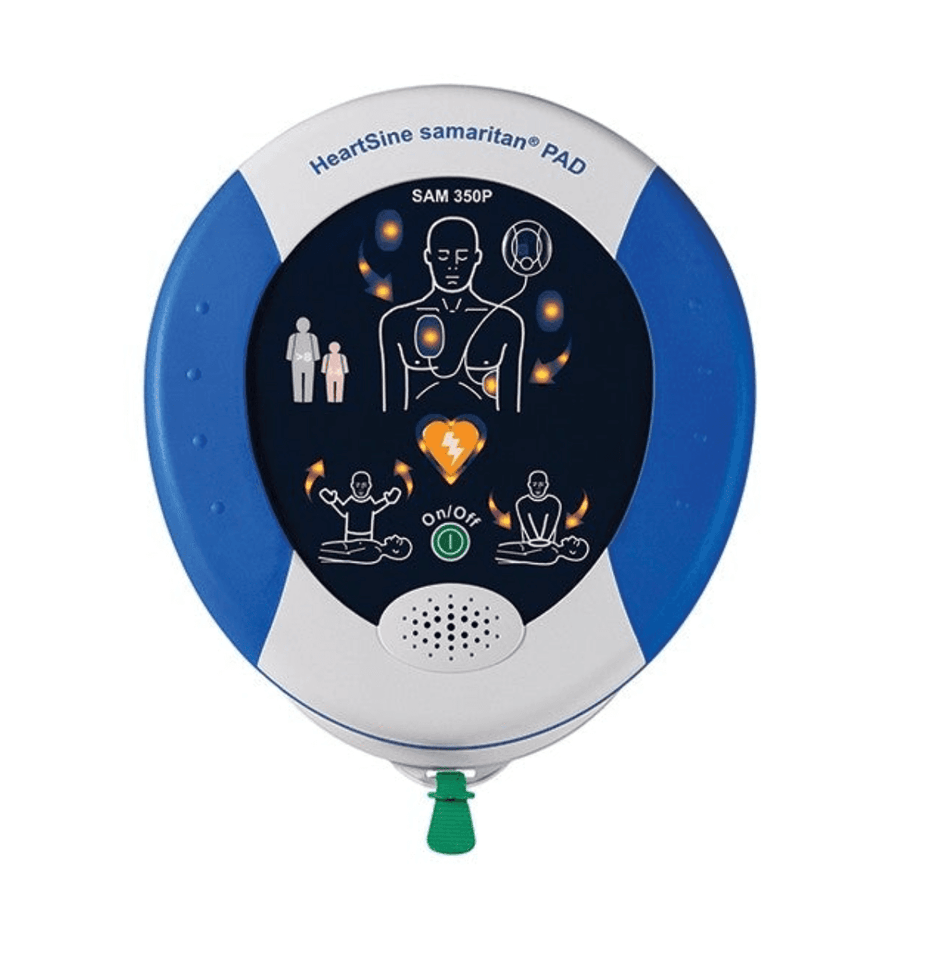
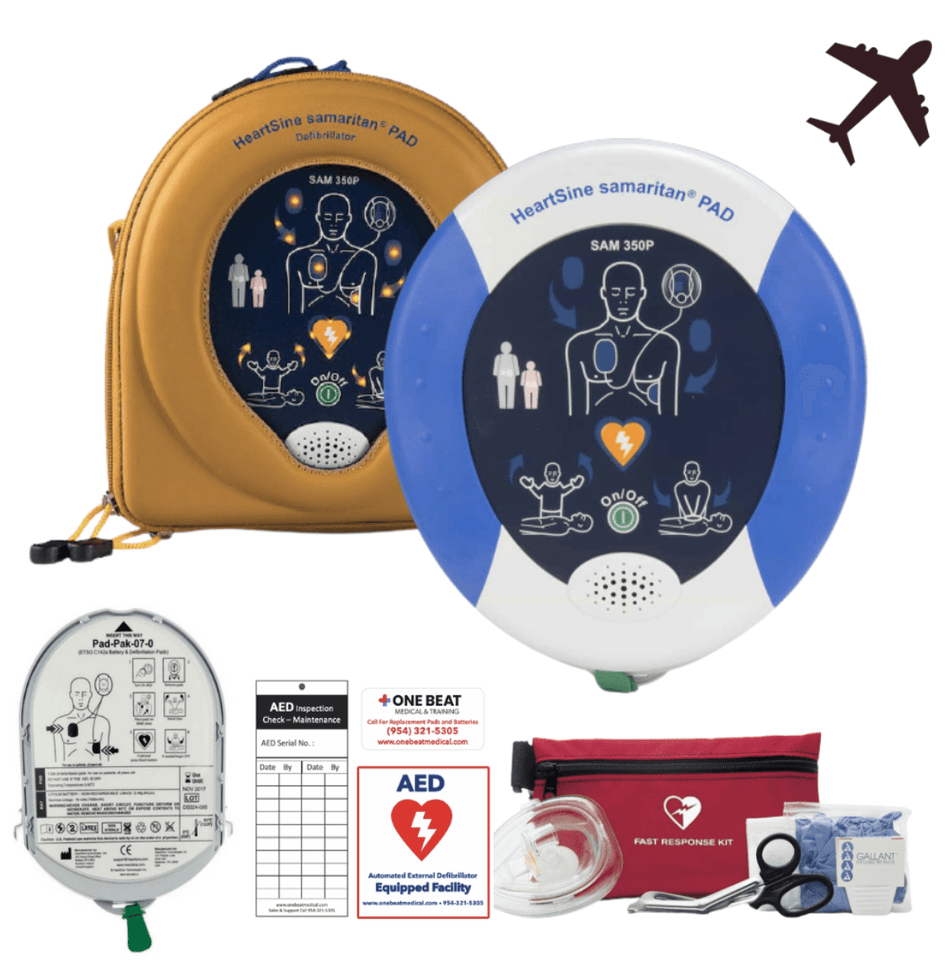
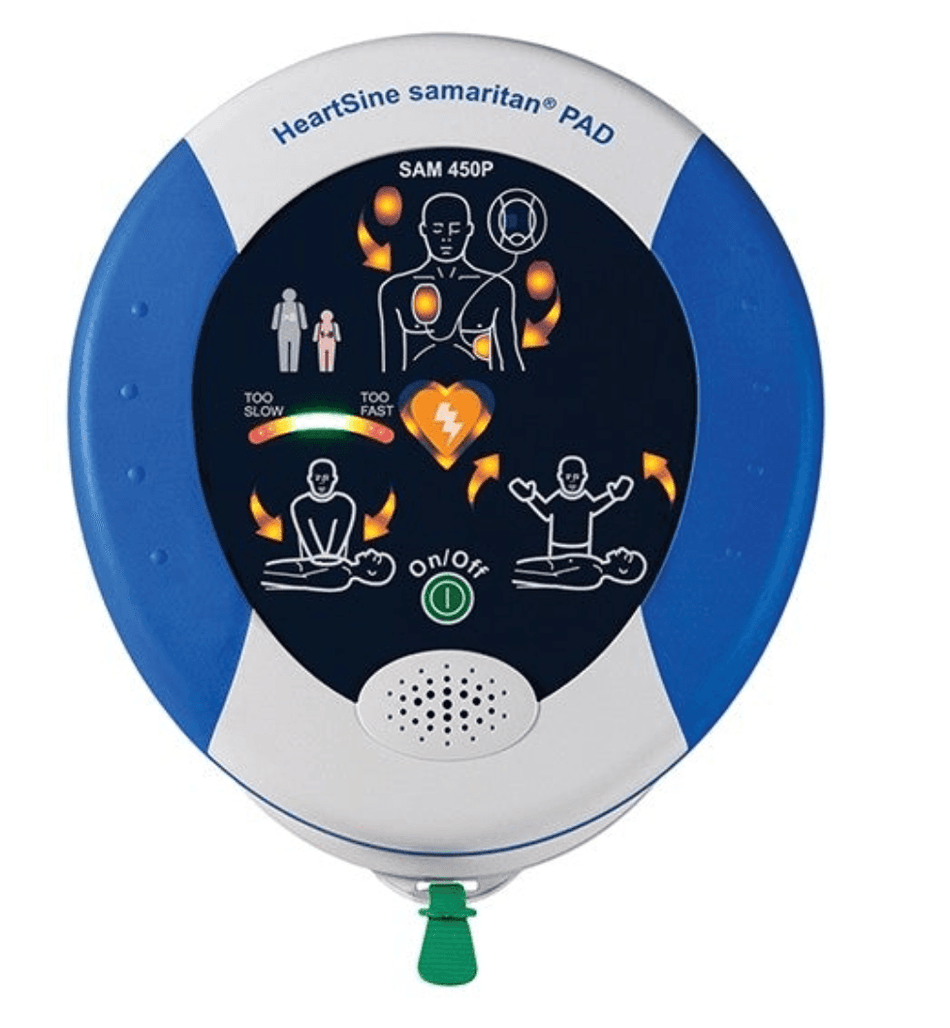
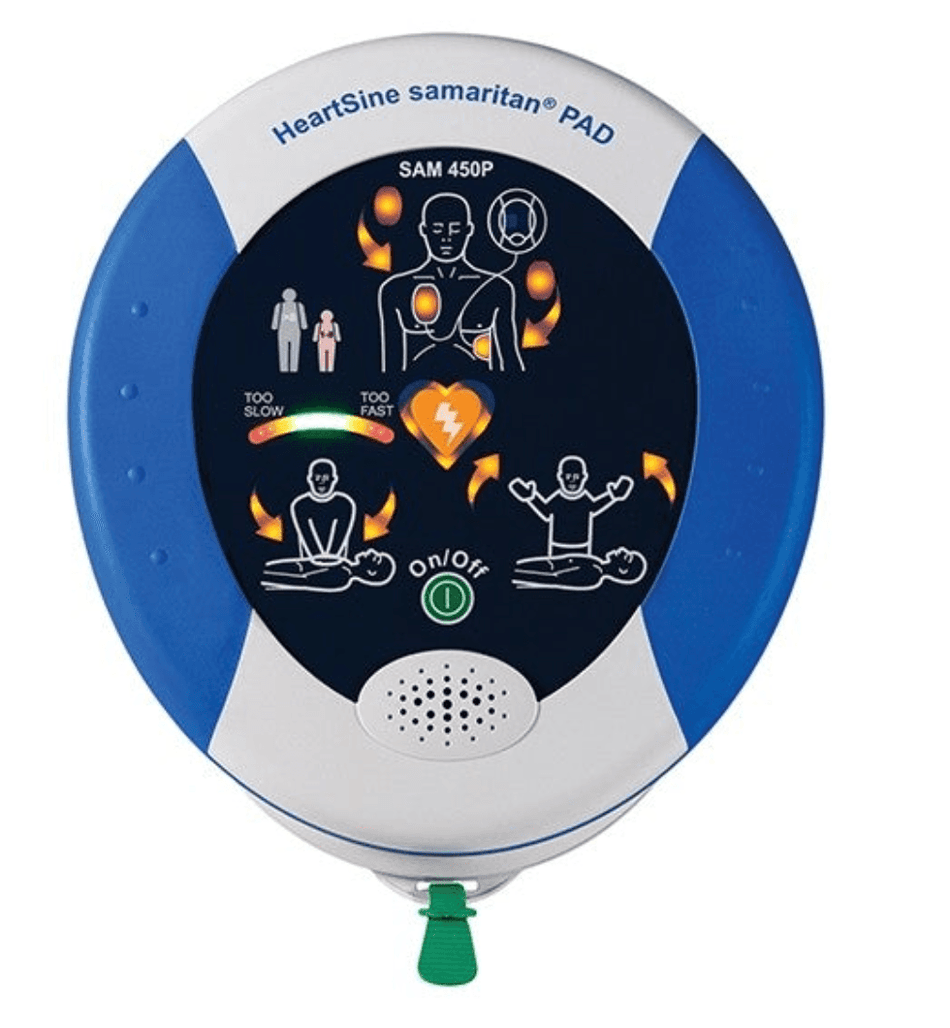
In healthcare settings, patient safety and regulatory compliance go hand in hand. Stryker’s HeartSine Samaritan PAD AEDs are designed to deliver life‑saving shocks quickly and safely, whether you’re in a clinic, dental office or surgery centre. Equipped with real‑time CPR guidance, rugged yet lightweight construction, and FAA‑approved aviation options, these devices provide reliable protection wherever care is delivered. With long‑life Pad‑Pak cartridges that combine battery and pads into a single four‑year replacement cycle, you’ll meet AED maintenance and policy requirements while minimizing the effort and cost of ownership.
Why HeartSine / Stryker AEDs?
-
Compact & Lightweight – Weighs about 2.4 lbs and is up to 56 % smaller than many other AEDs. Easy to mount in small exam rooms or transport via crash cart.
-
Integrated Pad‑Pak System – Combines battery and electrodes into a single cartridge with a four‑year shelf life, reducing maintenance and costs.
-
Real‑Time CPR Guidance (450P) – Built‑in metronome and CPR Rate Advisor coach rescuers on compression speed, confirming when the correct rate is achieved.
-
Semi‑Auto & Fully Automatic Options – Choose the 350P (semi‑auto with shock button) or 360P (fully automatic, no shock button) to match staff comfort.
-
Rugged Durability – IP56-rated for dust and water resistance and drop‑tested to military standards.
-
Aviation‑Certified Models – TSO‑approved Aviation 350P/360P and 450P Aviation models for airlines, medevac aircraft and travel compliance.
Which HeartSine AED is Right for Your Facility?
| Environment / Need |
Recommended Model |
Why |
| General clinics, dental offices, small healthcare sites |
Samaritan PAD 360P (fully automatic) |
No shock button; device delivers shock when needed. Voice prompts guide CPR. |
| Practices preferring manual control |
Samaritan PAD 350P (semi‑auto) |
Same features as 360P but with a shock button for manual activation. |
| High‑risk procedures / sedation |
Samaritan PAD 450P |
Adds CPR Rate Advisor for real‑time compression feedback. |
| Aviation / transport use |
350P/360P Aviation TSO or 450P Aviation
|
FAA‑approved for aircraft; meets TSO-C142a standards and suited for medical transport. |
How to Use a HeartSine / Stryker AED (simple steps)
-
Check responsiveness & call for help – Ensure scene safety and call emergency services or activate the emergency response plan.
-
Power on the AED – Press the On/Off button; the unit begins voice and visual prompts.
-
Apply the pads – Remove clothing and attach Pad‑Pak pads to the bare chest. If treating a child, insert the Pediatric Pad‑Pak.
-
Stand clear & let the AED analyze – Do not touch the patient as the device checks rhythm.
-
Deliver shock – If using the semi‑auto 350P or 450P, press the shock button when advised. The 360P and Aviation models deliver the shock automatically.
-
Perform CPR – Follow voice instructions; the metronome provides compression cadence. On the 450P, the CPR Rate Advisor will signal if you need to speed up or slow down.
-
Continue until EMS arrives – Repeat the analysis and CPR cycles until professional help arrives or the patient recovers.
Applications of HeartSine AEDs
-
Clinics & Dental Offices – Small footprint and low maintenance simplify compliance with health regulations.
-
Air Ambulance & Aviation – FAA‑approved models ensure your aircraft meet emergency equipment standards.
-
Corporate & Outpatient Facilities – High visibility and intuitive operation make these AEDs ideal for reception areas or procedure rooms.
-
Sports Medicine & Rehabilitation Clinics – CPR coaching and rugged design handle busy, high‑activity environments.
-
Remote & Mobile Care – Lightweight devices with long battery life suit medical outreach, school nurses and mobile clinics.
Why buy from Hero LifeCare?
Hero LifeCare doesn’t just sell defibrillators; we deliver personalized AED programs. We’ll match you with the right HeartSine model (350P, 360P, 450P, or Aviation), help you set up service plans and training, and manage pad/battery replacement schedules. Our team can coordinate multi‑site installations and provide real‑time readiness monitoring if you choose connected options. With us, your practice stays compliant and your staff stays prepared.