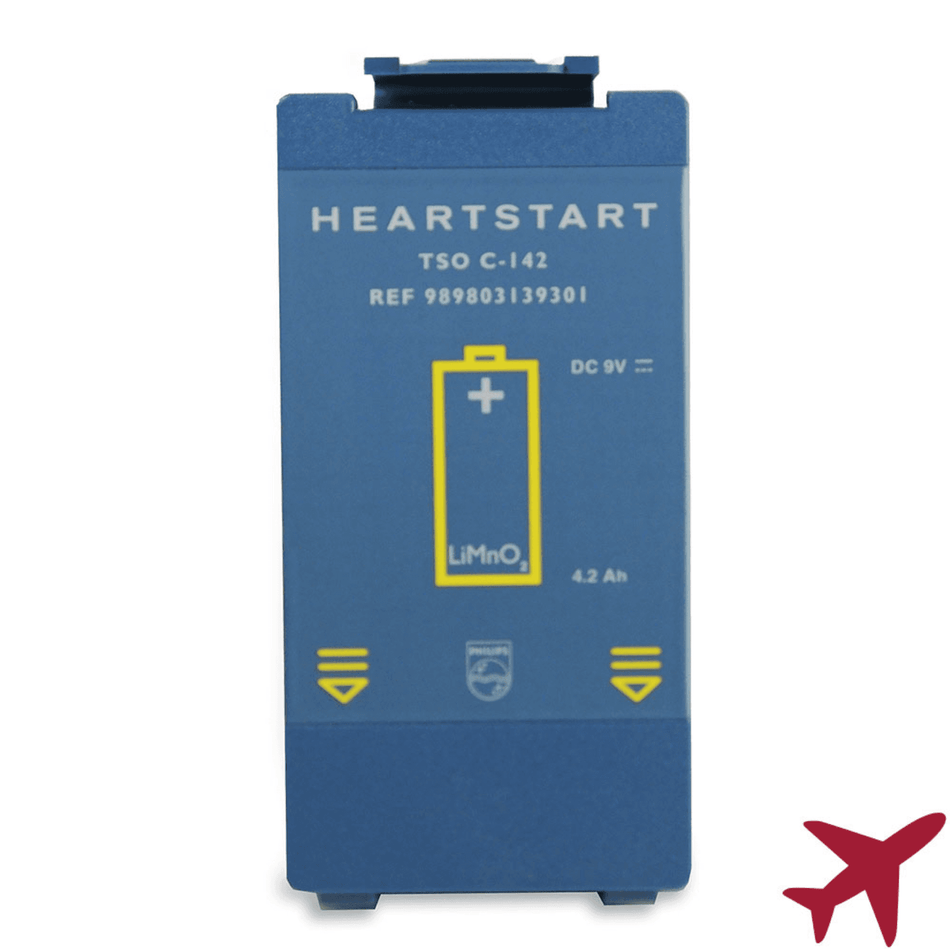
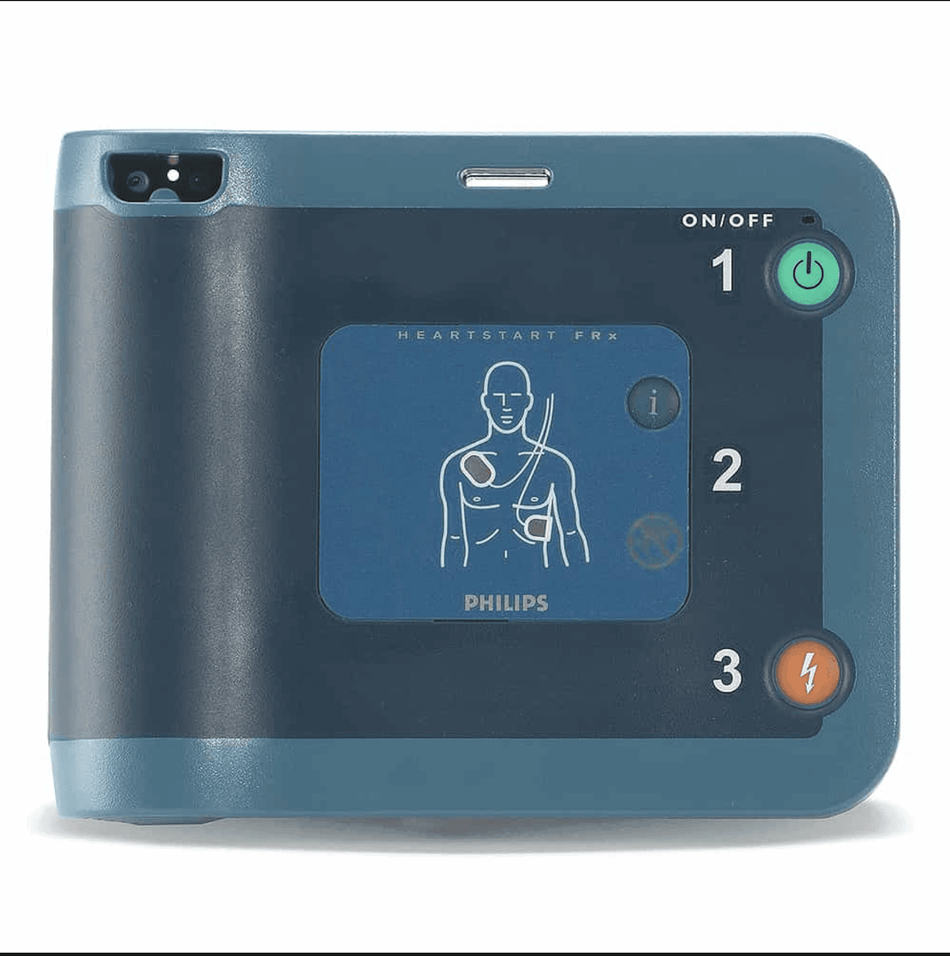
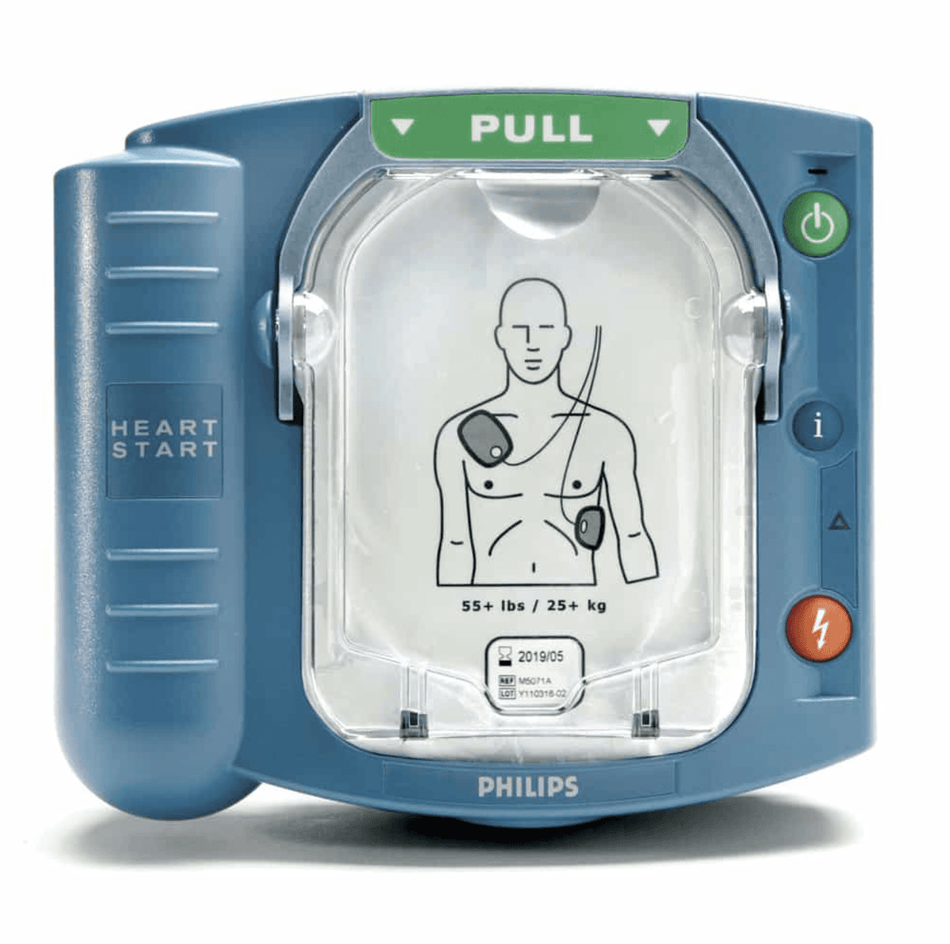
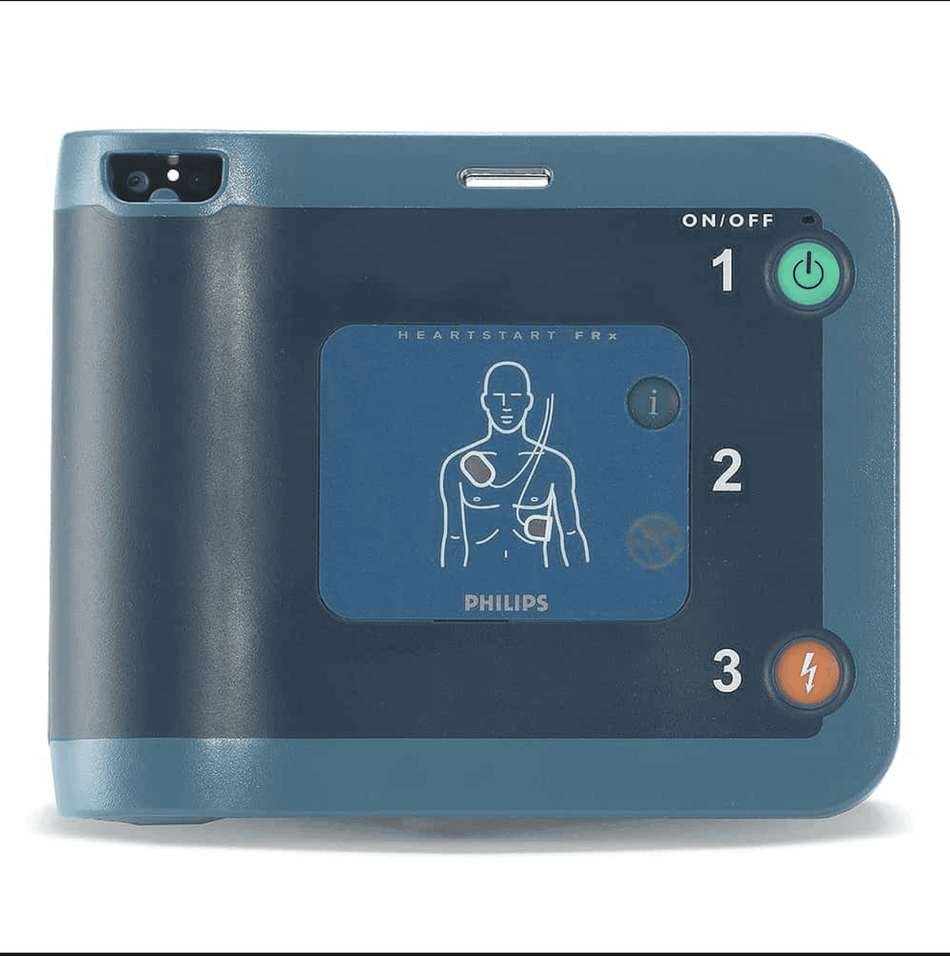
If your AED isn’t ready, it risks lives — and compliance. Philips HeartStart automated external defibrillators (AEDs) are designed so that ordinary people can act quickly during sudden cardiac arrest. Devices like the HeartStart OnSite and HeartStart FRx use real‑time voice prompts and a metronome to guide you through pad placement, CPR compressions, and shock delivery. With pre‑installed pads and battery, a Ready‑Pack configuration, and self‑tests, the OnSite AED arrives virtually ready for use. The rugged FRx model delivers the same intuitive guidance but adds a Quick Shock feature (shock in ~8 s after CPR) and a design that withstands rough handling, water, and temperature extremes.
Why buy Philips AED?
Real‑time guidance – Step‑by‑step voice instructions and an audible metronome guide rescuers through pad placement, chest compressions and breaths; the prompts repeat or adapt if a step is missed.
Quick Shock analysis – Both OnSite and FRx deliver a shock within ~8 s after CPR, helping minimise interruptions.
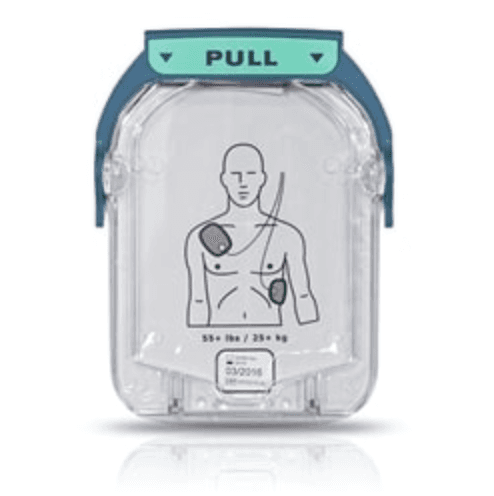
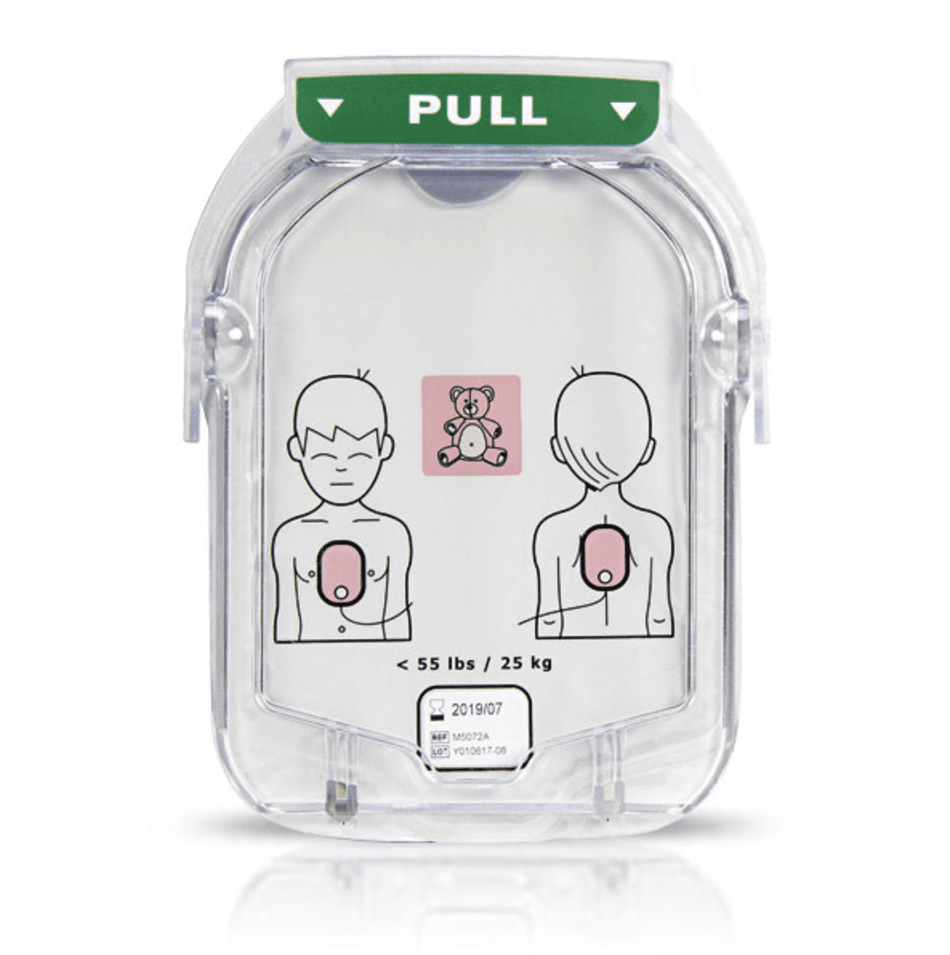
One‑set pads for adults and children – The FRx uses SMART Pads II for adults and children; simply insert the optional infant/child key to automatically reduce shock energy and adjust instructions. The OnSite senses when an Infant/Child SMART Pads cartridge is installed and automatically adjusts coaching and energy.
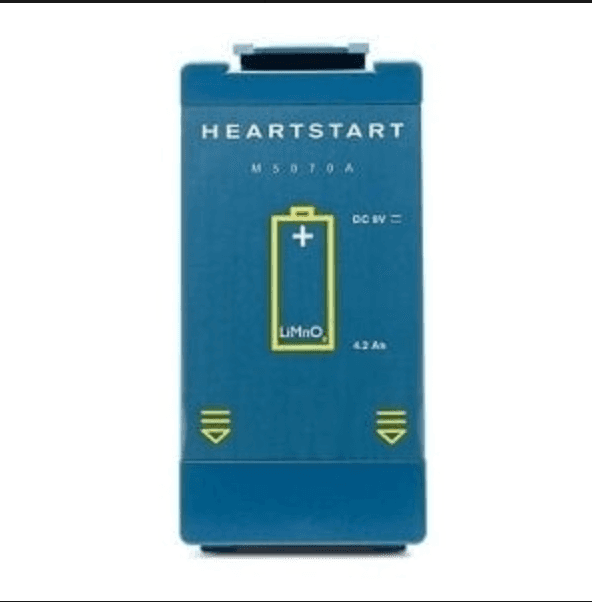
Ready to use and self‑checking – The OnSite arrives in a carry case with the battery and pads pre‑installed; pulling the green tab activates an initial self‑test. It then performs daily, weekly and monthly self‑tests of the pads, battery and internal circuits.
Rugged and reliable – The FRx AED is lightweight yet designed to withstand rough handling, extreme temperatures, dust and water. It can bear up to 500 kg and survive drops from 1.2 m—ideal for outdoor or industrial environments.
Convertible for training – Using a SMART Training Pads cartridge, the OnSite can switch into a non‑shock training mode for drills. Separate FRx and OnSite trainers help practice with voice prompts and scenarios.
Which Philips AED is right for you?
| Audience / Environment |
Recommended model |
Why |
| Offices, schools, gyms & community venues |
HeartStart OnSite (HS1) |
Arrives ready‑to‑use with pads and battery installed; provides simple voice prompts and metronome, integrated SMART Pads and self‑tests. Optional training pads allow it to double as a trainer. |
| Industrial sites, aircraft, sports fields & harsh conditions |
HeartStart FRx |
Offers the same intuitive voice guidance plus Quick Shock and pre‑connected SMART Pads II; rugged, water‑jet‑proof and drop‑tested. Infant/Child key lets you treat children without changing pads. |
| Home use or small offices |
HeartStart Home (similar technology) |
Designed for non‑medical users; step‑by‑step voice prompts and CPR guidance; first FDA‑approved over‑the‑counter defibrillator (not widely covered here but noted in Philips’ related products). |
Which Philips AED is right for you?
-
Check safety & call for help – Ensure the area is safe, tap the victim and shout. Call emergency services and ask someone to fetch the AED.
-
Turn on the AED & follow the prompts – Press the green On/Off button. The AED provides voice instructions with visual icons.
-
Expose chest & attach pads – Remove clothing; apply the adhesive pads as illustrated. For OnSite, insert the Infant/Child pads cartridge when treating children; for FRx, insert the infant/child key to use the same pads for paediatric use.
-
Stand clear & let the AED analyse – The device analyses the heart rhythm; do not touch the victim.
-
Deliver shock if advised – Press the orange shock button when prompted.
-
Perform CPR – Follow the metronome for compression rate and depth, continuing until the AED asks you to stop for re‑analysis. Swap rescuers every ~2 minutes.
-
Continue until help arrives – Repeat analysis and CPR cycles. The AED stores event data for later review.
Why buy Philips AEDs from Hero LifeCare?
-
Tailored for your setting – Whether you need an OnSite AED for a school gym or a rugged FRx for a construction site, Hero LifeCare configures the pads, battery life‑cycle tracking and accessories (cabinets, cases and signage) for your environment.
-
Program management & compliance – Hero LifeCare helps schedule pad and battery replacements, keeps maintenance logs and provides incident documentation to ensure your AED fleet stays compliant.
-
Training & drills – By pairing Philips AEDs with training pads and trainers, Hero LifeCare offers role‑based CPR/AED drills to build confidence among bystanders.
-
Scale‑ready solutions – For organisations with multiple locations, Hero LifeCare can coordinate multi‑site installations, provide remote readiness checks and manage updates, ensuring every Philips AED is rescue‑ready.
Applications of Philips AEDs
Philips AEDs are versatile and widely used across industries and community settings. Their intuitive design and rugged reliability make them suitable for:
-
Schools & Universities – Easy for staff and students to use with clear voice prompts and CPR coaching.
-
Hotels, Restaurants & Hospitality – Compact, discreet and ready for guests or staff in public spaces.
-
Airports & Transportation Hubs – Quick-Shock technology and rugged FRx design handle high-traffic, high-stress environments.
-
Sports Facilities & Gyms – Fast response and metronome-guided CPR help protect athletes and spectators.
-
Workplaces & Offices – OnSite AEDs arrive ready-to-use, ensuring rapid action during cardiac emergencies.
-
Factories & Industrial Sites – FRx AED withstands dust, vibration, temperature extremes and rough handling.
-
Community & Public Venues – From shopping malls to event arenas, Philips AEDs are designed for lay responders to act quickly.
-
Emergency Responders & Healthcare – FRx and FR3 models offer ruggedness, data logging and advanced readiness features for EMS and professional teams.